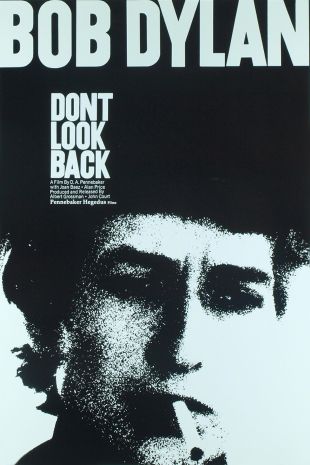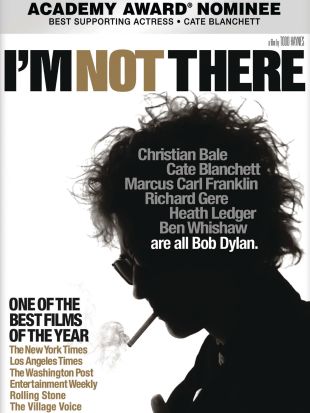
(2007)4Bruce EderEasily the most widely covered movie in director Todd Haynes' output to date, I'm Not There was a strange combination of serious filmmaking -- on a challenging level for the casual filmgoer -- and a mini-media event that, thanks to an unexpected tragedy, also became a major event/film. As demonstrated previously in his Douglas Sirk-influenced Far From Heaven, Haynes is a master of traditional film styles and genres, and here he goes to town exploring the public and private sides of Bob Dylan's life, career, and image -- and the public perceptions of both -- in a dazzling array of styles and tones, many of the latter derived from actual film projects in which the renowned singer/composer has been involved across his career. Haynes also displays a knowing eye for detail in the framing of his different settings -- the cinematic in-jokes that abound elicited more than a little knowing laughter from the original intended audience for this off-beat film, which might best be called a bio-fantasy. Amid the cleverness are some insights that are often overlooked by fans who came late to Dylan's music and mystique: his flaws and errors, which are sometimes a bit disturbing in their depictions, even to those who were aware of them; and also his debt to African-American artists and traditions, explored rather touchingly in the scenes in which Marcus Carl Franklin portrays the young Dylan as he finds his way into the folk music traditions, and the weight that they carried. As an actual portrayal, Cate Blanchett almost steals the picture in her sequences as Dylan in his folk-rock breakthrough era -- and what Haynes does with some of those sequences (including stylistic nods to both D.A. Pennebaker and Richard Lester) is off-handedly delightful on a multitude of levels. The movie is a phantasmagoric mix of biography, legend, rumor, and fantasy that flows seamlessly (and could have run even longer -- there was a lot that wasn't used in the final cut) across over two hours.
I'm Not There might have found its audience among moderate-to-dedicated Dylan fans, but a few weeks after it opened, Heath Ledger, who played one of the incarnations of Dylan, died very suddenly. As Ledger lived (and died) only a few blocks from New York's Film Forum, where the movie had premiered (and was still running), his (mostly younger) fans flocked to the film over the next few weeks, and attendance exploded at theaters where the picture had been booked for what might otherwise have been a reasonably successful run. It was a tragic circumstance, but it turned I'm Not There into a much bigger media event than it already was, especially since Ledger's last major (and well-publicized) performance, as the Joker in The Dark Knight, wasn't due for release for months. It wasn't the way that anyone would have wanted this movie to become well known, but it ended up giving Haynes something more than a cult hit, and deservedly so. As a meditation on a ubiquitous, mostly enigmatic and elusive, and sometimes troubling musical and media figure, I'm Not There is about as close to its subject as any movie not made by Dylan himself is likely to get, and offers some cleverly conceived angles on the pieces that comprise its central puzzle.
Director Todd Haynes' unconventional biopic of the legendary singer/songwriter Bob Dylan features different actors playing the part of the Minnesota native at various stages of his remarkable career. Among the actors playing the singer are Cate Blanchett, who portrays the man during his Don't Look Back era incarnation; Heath Ledger, as an actor playing one of the fictional Dylans in a movie within the movie; Christian Bale, as the Dylan beginning to chafe at being associated so strongly with political causes; Richard Gere, portraying the post-motorcycle accident period; and Marcus Carl Franklin as the young Dylan who passed himself off as the second coming of Woody Guthrie. Each section of the film not only has a different lead actor, but offers different looks that reflect various aspects of popular culture at the time.