For 30 years, from the beginning of the 1930s until the early '60s, Max Greene was one of the most influential and admired cinematographers in England. Born Mutz Greenbaum in Berlin, he was the son of pioneering German film producer Jules Greenbaum, and initially worked for his father's company, Greenbaum Films, during the early '20s, as did his older brother, George Greenbaum. Mutz Greenbaum was sufficiently well educated by his father so that he could start out as a cinematographer, and he spent more than a decade working in Germany, assembling an impressive array of photography credits, most notably in association with director Franz Hofer. Greene also shared cinematography credits with Charles Rosher, Richard Angst, and Akos Farkas, among others. He left Germany for England at the start of the 1930s, joining Gaumont-British (later part of The Rank Organisation) as director of photography at their Lime Grove Studios.
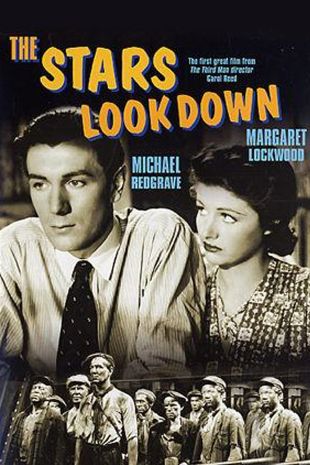
During the 1930s, Greene became closely associated with producer Michael Balcon, then one of the two most talented and ambitious producers in England (the other being Alexander Korda) and such top-flight directors as Walter Forde and Robert Stevenson. Greene photographed such important films as the drama The Constant Nymph (1933), the satire Bulldog Jack (1934), the historical drama Tudor Rose (1936), and the aerial adventure yarn Non-Stop New York (1937). He was one of the pioneers in British film industry in the use of low-key lighting, and was one of the most sought-after cinematographers of the 1930s. He was credited as both Max Greene and Mutz Greenbaum for overlapping periods into the 1940s, alternating even on different editions of prints of the same movie. At the end of the '30s, he'd reached the top of his profession, photographing such films as The Stars Look Down (1939), Leslie Howard's Pimpernel Smith (1942), Pastor Hall (1940), and Thunder Rock (1942), the latter two for John Boulting and Roy Boulting at the outset of their joint careers as writer/producer/directors.
By the mid-'40s, Greene had moved up to assistant producer (in addition to being cinematographer) on pictures like Lawrence Huntington's Wanted for Murder (1946). He co-directed a handful of movies, including Escape to Danger and Hotel Reserve for British RKO; and he finally moved into the director's chair on his own for The Man From Morocco (1944), starring Anton Walbrook. Greene's forte, however, was cinematography, and by 1947 he was back exclusively behind the camera again, working principally for producer Herbert Wilcox, with one notable exception. It was during this period that Greene turned in the best work of his career, on the British Fox production of Jules Dassin's Night and the City (1950). The movie (which exists in two distinctly different editions) is an essay in subdued lighting and it is a cinematographer's dream, taking us on a nightmarish tour of a London that always seems shrouded in darkness, even in midday. If any movie of Greene's deserved Academy Award consideration for its photography, it was this film, which took decades to be fully appreciated.
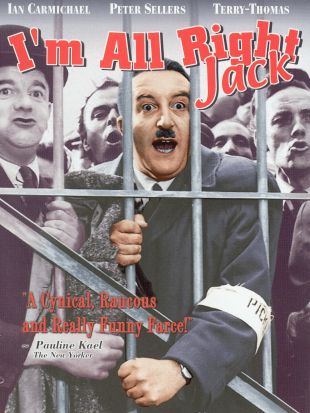
The quality of the films on which he worked declined in the 1950s, though he did do some impressive work on Teenage Bad Girl in the second half of the decade and, at the tail end, resumed his work for the Boulting brothers at the point when they were at the top of their game, on movies such as Carlton-Browne of the F.O. and I'm All Right Jack, both from 1959 (and both starring Peter Sellers). The last major film that he photographed was the Boultings' Heavens Above! (1963). In recent years, Greene's work has been more openly praised as the movies that he worked on have come in for generally positive reappraisal. Night and the City was featured in a two-week run at New York's Film Forum in the spring of 2003 that also included a partial presentation of the alternate British edition of the movie. Also, Wanted for Murder, which was otherwise a lost movie, has received special treatment in its DVD edition from Allday Entertainment.