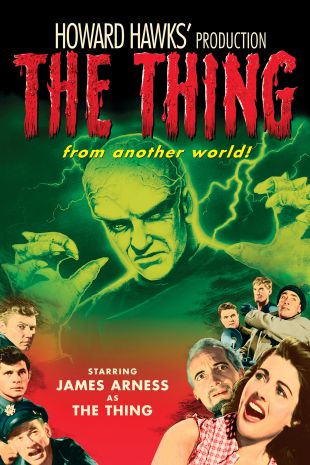
One of the great American film directors, Howard Hawks was a craftsman who made tight, lean pictures during the studio era. Not confined to a particular genre, his filmography provides outstanding and influential examples of a variety of movies. His style was non-obtrusive and no-nonsense, with telling images (he's famous for narratively significant cigarette lighting) and rapid-fire dialogue. Lines in his work were delivered overlapping each other, resulting in unnaturally quick-paced conversations that added tension and a sense of urgency to the stories. In addition to being a good screenwriter himself, he had a tendency to work with some of the era's best writers, including Ben Hecht, William Faulkner, and Jules Furthman.
Born in the Midwest in 1896, Hawks moved to California during the earliest days of Hollywood. After studying mechanical engineering at Cornell and serving in the U.S. Army Air Corps, he went to work at Famous Players-Laskey and started his own independent productions. By 1924, he was running the story department at Paramount and directing silent films for Fox. But he really began to make his mark with the advent of sound; his first talking pictures included the aviator adventure The Dawn Patrol, the prison film The Criminal Code, and sea adventure Tiger Shark. In 1932, he made the historically important Scarface, which, in many ways, defined the standard of gangster films. In 1938, he made the exemplary screwball comedy Bringing up Baby starring Katharine Hepburn and Cary Grant. This quick-talking duo was one of Hawks' many star pairings involving a tough wise guy and smart-mouthed heroine; another good team was Carole Lombard and John Barrymore in the comedy Twentieth Century.
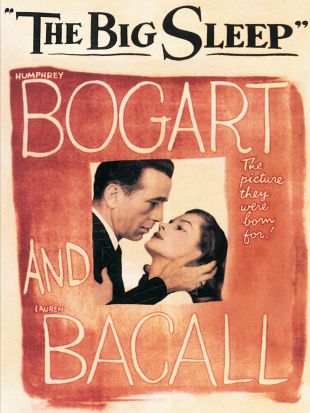
Hawks also had a knack for helping to initiate the careers of major Hollywood stars. His 1939 macho adventure Only Angels Have Wings featured Rita Hayworth in a supporting role before she became a leading femme fatale. He made the romantic comedy touchstone His Girl Friday the following year, with Rosalind Russell as the embodiment of the smart-mouthed heroine. In 1944, the director helped start the career of newcomer Lauren Bacall by pairing her with Humphrey Bogart in the war romance To Have and Have Not. Their obvious chemistry and snappy repartee led to one of the most beloved screen duos in history, and to Hawks' 1946 mystery The Big Sleep. During the '40s, he made the powerful Western drama Red River with John Wayne and Montgomery Clift. He also had a hand in launching the iconic stardom of Marilyn Monroewith the '50s comedy Monkey Business and the musical Gentlemen Prefer Blondes. In a response to the Western High Noon, Hawks teamed up again with Wayne for the revisionist Western Rio Bravo. As age caught up with him during the '60s, Hawks' career slowed down -- and so did the pace of his films. He received his first Oscar in 1974, an honorary award from the Academy before his death in Palm Springs, CA, in 1977.