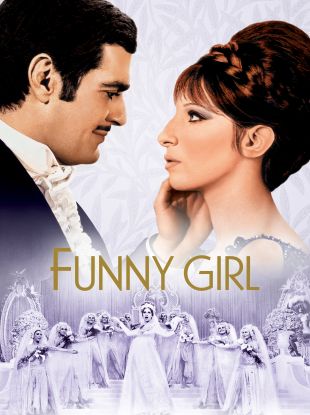
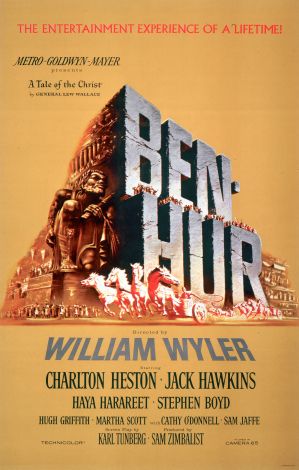
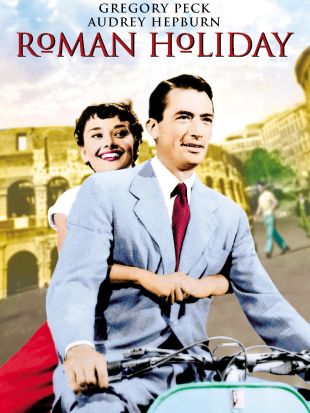
The son of a prosperous Swiss dry goods merchant, William Wyler was studying the violin in Paris when he met Universal Pictures executive Carl Laemmle, a distant cousin of his mother, in 1922. Another version of this fateful meeting claims that Wyler made the acquaintance of one of Laemmle's many European relatives; whatever the case, the 20-year-old Wyler was invited to America to work in Universal's publicity department, writing publicity for the studio's foreign releases. He worked his way up to assistant director at Universal, finally graduating to director for the two-reel Western Crook Buster (1925). This was followed by several feature-length sagebrushers, then by his first non-Western effort, Has Anybody Here Seen Kelly? (1927). Universal's slapdash production methods and abbreviated schedules convinced Wyler that if he ever graduated to A-pictures, he would take his own sweet time making them. As a result, Wyler would earn a reputation as one of the slowest and most meticulous directors in the business, shooting extensive retakes on even the simplest scenes. Wyler's painstaking methods and his autocratic on-set behavior exasperated and infuriated many, but he was the favorite director of the equally demanding producer Sam Goldwyn. The long Goldwyn/Wyler association began with the 1936 film These Three, a heavily rewritten adaptation of Lillian Hellman's controversial play The Children's Hour. Another of Wyler's yea-sayers was Bette Davis, who, despite her frequent high decibel arguments with the director, turned out some of her finest performances in such Wyler projects as Jezebel (1938), The Letter (1940), and The Little Foxes (1941) (the fact that Davis and Wyler were occasional offscreen lovers might also have had something to do with their successful professional collaborations). Commissioned as a major in the U.S. Army Air Corps during WWII, Wyler helmed two classic documentary films, The Memphis Belle (1943) and Thunderbolt (1944); his courage while filming under the most life-threatening of situations earned Wyler an Air Medal and a promotion to Lieutenant Colonel. After the war, Wyler helped found the Committee for the First Amendment, a group of Hollywood liberals united to battle the witch-hunting excesses of the House Un-American Activities Committee. Wyler produced as well as directed most of his postwar projects, which included The Heiress (1949), Detective Story (1951), Roman Holiday (1953), The Desperate Hours (1955), and Friendly Persuasion (1956). He also directed The Children's Hour (1961), a remake of his own These Three (1936), which retained the lesbianism angle that the earlier film was forced to do without. Wyler won three Best Director Academy Awards, all for films which were honored with Best Picture Oscars: Mrs. Miniver (1942), The Best Years of Our Lives (1946), and Ben-Hur (1959) (he'd been one of many production assistants on the 1926 silent version of the last named film). Married twice, Wyler's first wife was film star Margaret Sullavan; his second was actress Margaret Tallichet, who gave up her screen career upon becoming Mrs. Wyler. William Wyler's final film was 1970's The Liberation of L.B. Jones; despite failing health, Wyler was primed to start work on 40 Carats (1973), but was advised by his physician not to do so -- possibly the only instance that someone other than Willy Wyler had the last word on a movie decision!
William Wyler
Share on
Biography by AllMovie
Movie Highlights
Factsheet
- Was studying violin in Paris in 1920 when he met his mother's cousin Carl Laemmle, the head of Universal Pictures, who hired him on the spot.
- Quickly moved up through the ranks at Universal, from the mail room to the publicity department to assistant director on short films, and finally to features. Was so displeased with the studio's insistence on a happy ending for Wuthering Heights (1939) that he chose not to direct the film's final shots. Intermittent love affair with Bette Davis did not hinder their numerous successful film collaborations, including Jezebel (1938), The Letter (1940) and The Little Foxes (1941). Helmed a number of documentaries while commissioned as a major in the U.S. Army Air Corps during World War II. A novice production assistant on the 1925 film Ben-Hur, Wyler went on to win a Best Director Oscar for his 1959 version. Received the American Film Institute's Life Achievement Award in 1976.