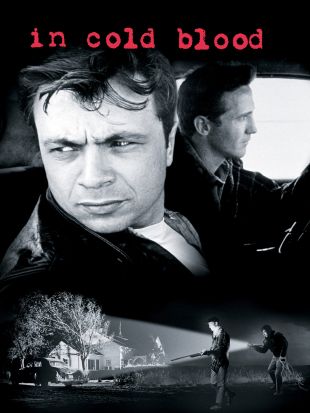
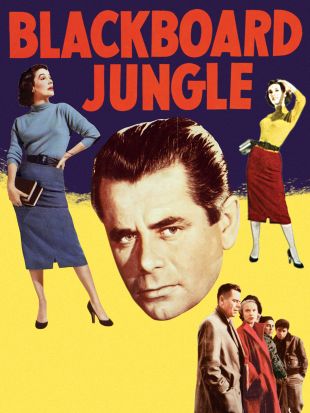
After attending Philadelphia's Temple University, Richard Brooks labored away as a sports reporter for the Atlantic City Press Union, the Philadelphia Record and the New York World-Telegram. Brooks joined New York radio station WNEW as a staff writer in the late 1930s, then moved on to the NBC network writing pool. After a season as director of New York's Mill Pond Theatre, Brooks headed to Los Angeles, where he did some more radio writing and broke into films as a scripter of "B" pictures, Maria Montez epics and serials. Following two years' wartime service with the Marines, Brooks published his first novel, an anti-intolerance effort titled The Brick Foxhole. Brooks was contractually unable to work on the screenplay adaptation of Brick Foxhole (released in 1947 as Crossfire), but found time to pen a brace of additional novels; he also co-wrote Brute Force (1947) and Key Largo (1948). In 1950, Brooks made his directorial debut with MGM's Crisis, an offbeat political melodrama containing a memorable dramatic performance by Cary Grant. Brooks' breakthrough film as director was the landmark juvenile delinquent drama The Blackboard Jungle (1955). Thereafter, Brooks was regarded as an "independent" (though he didn't officially break away from the studio system until 1965), scripting as well as directing such prestige items as Brothers Karamazov (1958) and Cat on a Hot Tin Roof. He earned several Academy Award nominations, winning the "Best Screenplay" Oscar for Elmer Gantry (1960). Brooks' later independent productions, nearly all of them adapted from popular novels, included Lord Jim (1965) In Cold Blood (1967) Happy Ending (1969, starring Brooks' then-wife Jean Simmons) and Looking for Mr. Goodbar (1976). In 1987, Brooks entered into a partnership with actor Robert Culp, but their Crime Inc. Productions never produced a film.
| Title | Year | Editors' Rating | User Rating | |
|---|---|---|---|---|
|
Fever Pitch
Director, Screenwriter |
1985 | |||
|
Wrong Is Right
Director, Producer, Screenwriter |
1982 | |||
|
Looking for Mr. Goodbar
Director, Screenwriter |
1977 | |||
|
Bite the Bullet
Director, Producer, Screenwriter |
1975 | |||
|
$ (Dollars)
Director, Screenwriter |
1971 | |||
|
The Happy Ending
Director, Producer, Screenwriter |
1969 | |||
|
In Cold Blood
Director, Producer, Screenwriter |
1967 | |||
|
The Professionals
Director, Producer, Screenwriter |
1966 | |||
|
Lord Jim
Director, Producer, Screenwriter |
1965 | |||
|
Sweet Bird of Youth
Director, Screenwriter |
1962 | |||
|
Elmer Gantry
Director, Screenwriter |
1960 | |||
|
Cat on a Hot Tin Roof
Director, Screenwriter |
1958 | |||
|
The Brothers Karamazov
Director, Screenwriter |
1958 | |||
|
Something of Value
Director, Screenwriter |
1957 | |||
|
The Catered Affair
Director |
1956 | |||
|
The Last Hunt
Director, Screenwriter |
1956 | |||
|
Blackboard Jungle
Director, Screenwriter |
1955 | |||
|
The Flame and the Flesh
Director |
1954 | |||
|
The Last Time I Saw Paris
Director, Screenwriter |
1954 | |||
|
Battle Circus
Director, Screenwriter |
1953 | |||
|
Take the High Ground
Director |
1953 | |||
|
Deadline U.S.A.
Director, Screenwriter |
1952 | |||
|
The Light Touch
Director, Screenwriter |
1951 | |||
|
Crisis
Director, Screenwriter |
1950 | |||
|
Mystery Street
Screenwriter |
1950 | |||
|
Storm Warning
Screenwriter |
1950 | |||
|
Any Number Can Play
Screenwriter |
1949 | |||
|
Key Largo
Screenwriter |
1948 | |||
|
To the Victor
Screenwriter |
1948 | |||
|
Brute Force
Screenwriter |
1947 | |||
|
Crossfire
Book Author |
1947 | |||
|
Swell Guy
Screenwriter |
1946 | |||
|
Cobra Woman
Screenwriter |
1944 | |||
|
My Best Gal
Screen Story |
1944 | |||
|
White Savage
Screenwriter |
1943 | |||
|
Men of Texas
Screenwriter |
1942 | |||
|
Sin Town
Screenwriter |
1942 |
/_derived_jpg_q90_100x100_m0/%24(Dollars)-Still1.jpg?partner=allrovi.com)